
Our methodology
Our methodology
Ten steps in a fixed order, with consultation, grievance redress and monitoring running beside all of them.
Step by step
The ten steps
- 01
Scope and set-up
Confirm the project boundary and every affected area. Agree roles with the provincial and district committees. Tell the villages what will happen and when.
- 02
Census and socio-economic survey
Interview every affected household. Record who lives there, what they do and what they earn.
- 03
Asset survey and cut-off date
Measure land, houses, trees and crops with each owner. The authorities then endorse the register and declare the cut-off date.
- 04
Valuation and entitlements
Apply approved unit rates at replacement cost. Set out who is entitled to what, and agree the values with each owner.
- 05
Site and livelihood planning
Choose and design the new sites with the households and host communities. Plan how incomes will be restored.
- 06
RAP drafting and approval
Bring the surveys, entitlements, plans, schedule and budget into one plan. Submit it, revise it, and disclose the approved version.
- 07
Compensation
Pay in full, into joint accounts of husband and wife, before any land is cleared or used.
- 08
Construction and relocation
Build and hand over houses and services first. Prepare each household, then move by village and phase.
- 09
Livelihood restoration and community development
Run the livelihood programmes and transitional support. Help the new village organise its services.
- 10
Completion
An independent evaluation checks that compensation is complete, incomes are restored and no grievance is open. Then the completion report is issued.
Cross-cutting
Running through every step
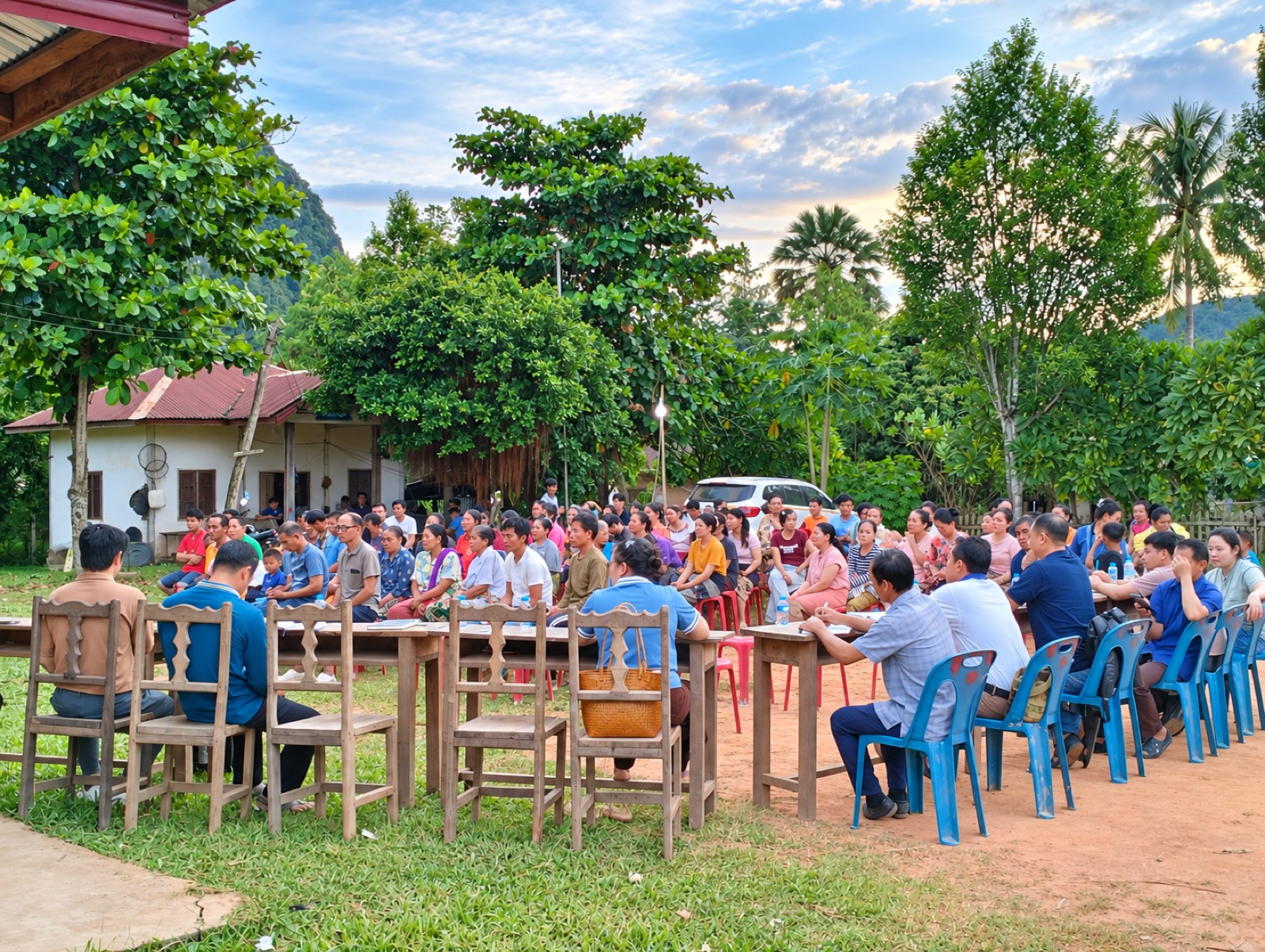
These three are not steps. They start with the first village meeting and continue to completion.
- Step 1 through step 10
Consultation and disclosure
Meetings at province, district and village level, with separate sessions for women, ethnic groups and vulnerable households.
- Step 1 through step 10
Grievance redress
Open before the first survey and kept open until after completion. Every complaint is recorded and answered within a set time.
- Step 1 through step 10
Monitoring and reporting
Internal monitoring each month and quarter, external review each year, and household income tracking after relocation.
Safeguards
Conditions we hold to
The order of the steps protects affected households. These conditions keep it in place.
No survey
before the villages are informed and the grievance mechanism is open.
No clearing or use of land
before compensation is paid in full.
No relocation
before the houses and services at the new site are accepted.
No relocation
during Buddhist Lent, the harvest or heavy rain.
No completion report
before an independent evaluation.
Planning a project that will move people or take land?
Tell us the project type, location and stage. We will reply with the surveys, plans and approvals it is likely to need.